Snowparks & Freestyle
What is Freestyle Skiing and Snowboarding?
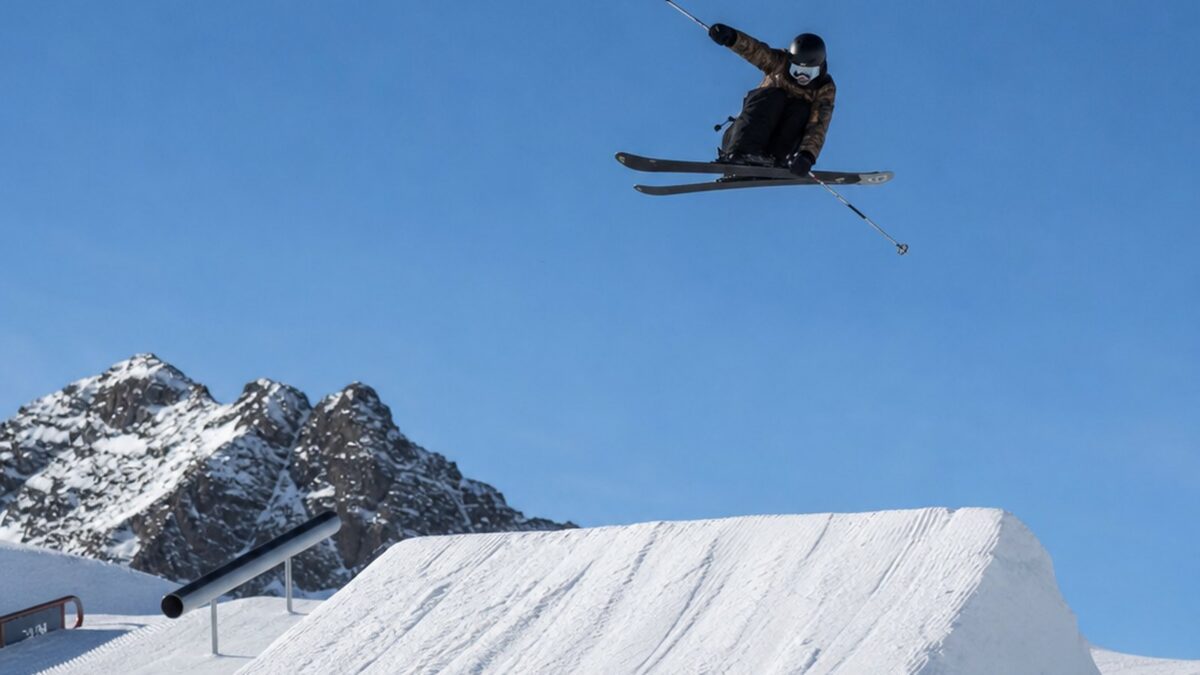
Freestyle skiing and snowboarding is a dynamic discipline focused on creativity, self-expression, and athletic skill. Rather than simply descending a mountain, freestyle riders use terrain and purpose-built features to perform an array of tricks, including jumps, spins, grabs, and slides. The modern snowpark is the dedicated arena for this activity, a carefully designed and maintained playground that allows riders of all levels to practise and progress in a controlled environment. The appeal is multifaceted; for some, it is the adrenaline rush of soaring through the air, while for others, it is the technical challenge of mastering a new trick on a rail. It fosters a strong sense of community, with riders often encouraging each other and sharing tips. Influenced heavily by skateboarding and snowboarding culture, and popularised by global events like the X Games and its inclusion in the Winter Olympics, freestyle has evolved into a mainstream and accessible part of mountain sports.
Anatomy of a Modern Snowpark
Snowparks can seem intimidating at first, but they are logically structured to facilitate safe progression. Most are organised into ‘lines’—a sequence of features—which are graded by size and difficulty, often using the same colour-coding as pistes (green, blue, red, black) or a sizing system (S, M, L, XL). This allows riders to build confidence on smaller features before moving to more challenging ones.
Key Park Features
- Jumps (Kickers): These are the most iconic park features. A jump consists of a take-off ramp, a flat ‘table’ or a gap, and a steep, smooth landing ramp designed to absorb impact. Learning to control your speed and stay balanced in the air on small kickers is a fundamental freestyle skill.
- Boxes and Rails: These are features designed for sliding on. Boxes are wide and flat, offering a stable surface ideal for beginners learning to balance. Rails are much narrower metal bars that come in various shapes—straight, curved (‘rainbow’), or with bends (‘kinked’)—and require significantly more precision and balance.
- Halfpipe: A U-shaped channel with vertical walls, a halfpipe allows riders to perform aerial tricks as they travel from one side to the other. A ‘superpipe’ is a much larger version used in top-level competitions.
- Jib Features: This is a broad category for any feature that isn’t a standard jump or rail. It can include wallrides, barrels, log slides, and other creative obstacles that riders can slide, tap, or jump off.
Who is Freestyle For? Skills and Fitness
Freestyle is not just for aspiring professionals. Any competent intermediate skier or snowboarder can start learning the basics. Before entering the park, you should be able to confidently link turns, control your speed, and stop effectively on blue and red pistes. These core skills are the foundation upon which all freestyle manoeuvres are built.
In terms of physical conditioning, a strong core is paramount. It provides stability in the air, control during slides, and balance upon landing. Good general fitness will help with endurance and the ability to absorb the impacts of repeated landings. Agility and proprioception—your body’s awareness of its position in space—are also hugely beneficial and will develop as you practise. While you don’t need to be an elite athlete, a decent level of fitness will accelerate your progress and help prevent injury.
Essential Freestyle Equipment and Protection
While you can ride the park on standard equipment, specialised gear makes progression easier and safer.
- Skis and Snowboards: Freestyle skis are known as ‘twin-tips’ because both the front and back ends are curved upwards. This is essential for skiing backwards (riding ‘switch’), a key component of many tricks. They are often softer and have their bindings mounted closer to the centre for better balance during spins. Similarly, freestyle snowboards are typically ‘true twin’ in shape, making them perform identically whether riding forwards or switch.
- Boots: Many freestyle riders prefer slightly softer, more flexible boots than those used for racing or all-mountain carving. This allows for greater ankle flexion, which helps with absorbing landings and making subtle adjustments on rails.
Protective Gear: Non-Negotiable Safety
The single most important investment is in protective equipment. Falls are an inevitable part of learning.
- Helmet: This is mandatory in almost all snowparks and is an absolute necessity for protecting against head injuries.
- Back Protector: Highly recommended, especially when learning to slide on rails and boxes where falling backwards is common. It can prevent serious spinal injuries.
- Impact Shorts: These padded shorts cushion the hips and tailbone, making falls less painful and reducing the risk of bruising or fractures.
- Goggles: High-quality goggles with good peripheral vision are crucial for spotting landings and seeing other riders in the park.
Park Etiquette and Safety First
A safe park is a fun park. Adhering to a code of conduct is essential for everyone’s safety. Most resorts promote the ‘SMART Style’ principles:
- Start Small: Work your way up. Begin in the small (S) line and master those features before moving to the medium (M) line.
- Make a Plan: Before you attempt a feature, think about the trick you are going to do. Visualise the entire process from approach to landing.
- Always Look: Before dropping in on any feature, look up the hill to ensure you are not cutting anyone off. Also, check that the landing area is clear.
- Respect: Respect the features and other park users. Wait your turn and give others space. Do not stop on a landing or in any other blind spot.
- Take it Easy: Know your limits. Ride within your ability level, especially at the end of the day when you are tired.
Before hitting any feature for the first time, ride alongside it to inspect the take-off and landing. This ‘scoping’ process helps you judge the required speed and identify any potential hazards.
Getting Started and Progressing Your Skills
The safest and most efficient way to begin your freestyle journey is to book a lesson with a qualified freestyle instructor. They can teach you the fundamental techniques in a controlled manner, building your confidence and correcting bad habits before they form.
Start with the most basic manoeuvres. On small jumps, practise ‘straight airs’—simply jumping and landing cleanly without any grabs or spins. On a flat box, learn to ride straight across it before attempting to turn onto it. Mastering these fundamentals is crucial. Once you are comfortable and consistent with a trick on a small feature, you can consider trying it on the next size up. Patience is key; rushing your progression is the quickest way to get injured.
Many of the world’s best ski areas have invested heavily in creating world-class freestyle facilities for all ability levels. Resorts like Laax in Switzerland, Mayrhofen in Austria, and Avoriaz in France are legendary for their extensive and creative parks. Our ski resort directory can help you find locations renowned for their freestyle offerings, ensuring you have the best possible terrain to develop your skills.
The Takeaway: Freestyle skiing and snowboarding offer a uniquely rewarding way to experience the mountains. The key to long-term enjoyment lies in a commitment to gradual progression and a safety-first mindset. By taking a lesson, wearing the proper protective gear, and always respecting the park and its users, you can safely unlock a whole new dimension of creative expression on the snow.
FAQ
Do I need special skis for the snowpark?
Yes, for skiing, twin-tip skis are essential. They have a raised tail, allowing you to ski and land backwards (switch). Freestyle snowboards are also recommended, often with a 'true twin' shape for symmetrical performance.
What is the minimum skill level for a snowpark?
You should be a confident intermediate skier or snowboarder, comfortable controlling your speed and making linked turns on blue and red pistes. You don't need to be an expert, but solid fundamentals are crucial for safety.
Is freestyle skiing dangerous?
Like all snow sports, it carries inherent risks. However, these can be significantly managed by wearing a helmet and other protective gear, following park etiquette (SMART Style), starting on small features, and progressing within your limits. Taking a lesson is the safest way to begin.
What is the difference between a box and a rail?
A box has a wide, flat surface, making it more stable and forgiving for beginners to learn how to slide on features. A rail is a much narrower, typically cylindrical or square metal bar, which requires more precise balance and is considered a more advanced feature.
How do I know how fast to go for a jump?
Judging speed is a key skill. The best practice is to watch other riders of a similar size hit the jump first to gauge the required speed. On your first attempt, aim to land on the 'knuckle' (the transition before the steep landing) and gradually increase your speed on subsequent runs until you are clearing it comfortably.
Are snowparks just for young people?
Not at all. While popular with younger generations, snowparks are for anyone with the required intermediate skills and a desire to try something new. Many older skiers and snowboarders enjoy the creative challenge of freestyle in a progressive and controlled environment.