Cross-Country Skiing
What is Cross-Country Skiing?
Often seen as the gentle counterpart to the high-octane world of alpine skiing, cross-country skiing is a discipline with its own unique appeal and challenges. At its core, it is a form of skiing where participants rely on their own locomotion to move across snow-covered terrain, rather than using ski lifts and gravity. Known as Nordic skiing in some regions, it is one of the original forms of skiing, born from a necessity for winter travel in Scandinavia.
The fundamental difference lies in the equipment and the objective. While downhill skiing is about mastering the descent, cross-country is about the journey. The skis are long and narrow, and the bindings attach only at the toe of the boot, allowing the heel to lift freely. This ‘free heel’ design is crucial for the striding and gliding motions that propel the skier forward. People are drawn to the sport for many reasons: it is an exceptional full-body workout, it offers a peaceful and immersive way to experience winter landscapes away from crowded pistes, and it is often more accessible and affordable than resort-based alpine skiing.
The Two Disciplines: Classic vs. Skate Skiing
Cross-country skiing is broadly divided into two distinct techniques, each requiring specific equipment and groomed trails. Most beginners start with the classic style before considering the more dynamic skate skiing.
Classic Style
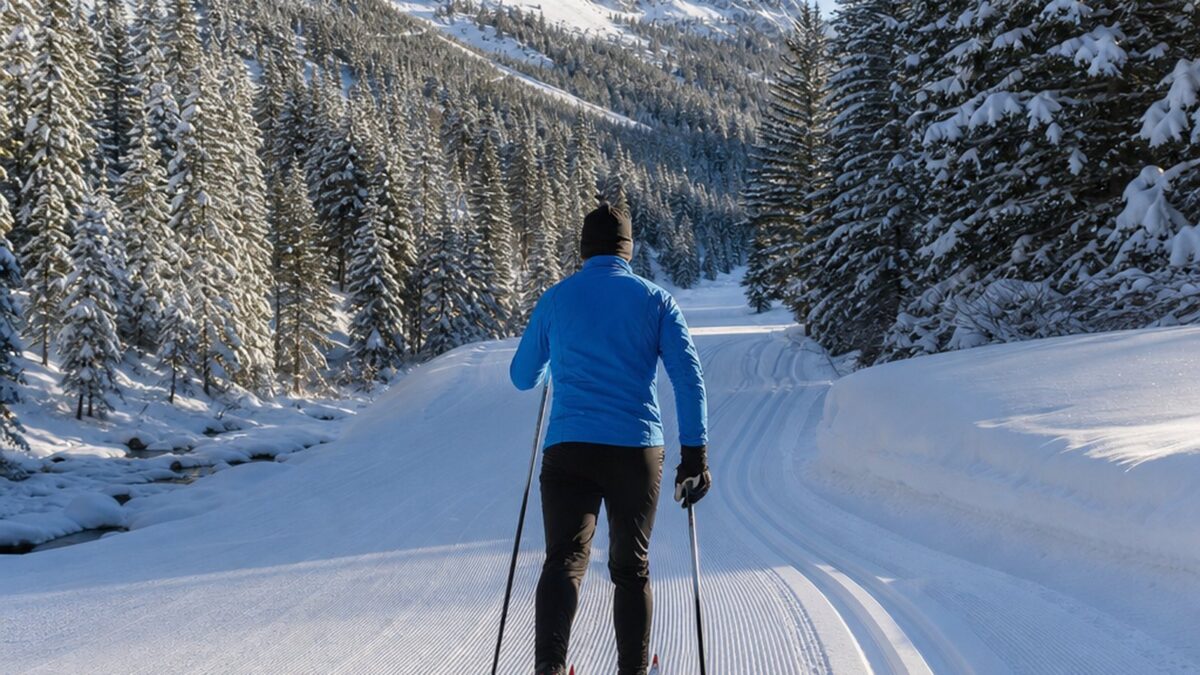
This is the traditional technique, characterised by a forward-striding motion that resembles an exaggerated walk or run. Classic skiing is typically done in parallel, machine-groomed tracks called ‘loipe’. The technique is based on a ‘kick and glide’ principle. Under the middle section of the ski is a ‘grip zone’, which is either coated with a special grip wax or features a textured, fish-scale pattern. When the skier pushes down and forward, this zone grips the snow, providing the traction needed for the ‘kick’. This propels the skier forward, allowing them to ‘glide’ on the other ski. It’s an intuitive motion that provides a steady, rhythmic workout.
Skate Style
Developed in the 1980s, skate skiing is a faster, more athletic technique that mimics the motion of ice skating. Skiers use a powerful side-to-side push-off from the inside edge of their skis to propel themselves forward in a V-shape. This technique requires a wide, firm, and smoothly groomed trail, often found alongside classic tracks in a Nordic centre. Skate skiing is more physically demanding than classic, requiring excellent balance, timing, and cardiovascular fitness. The skis have no grip zone, as they are designed for 100% glide, with propulsion coming entirely from the skater’s push. The result is a faster, more dynamic experience.
Who is Cross-Country Skiing For?
One of the greatest attributes of cross-country skiing is its incredible versatility, making it suitable for a wide range of ages and abilities. It is a low-impact activity, placing minimal stress on the knees and joints, which makes it an excellent choice for those recovering from injuries or seeking a lifelong sport.
Fitness Level: The intensity is entirely scalable. A gentle shuffle along a flat, scenic valley floor can be enjoyed by individuals with a very basic level of fitness. At the other end of the spectrum, a high-tempo skate ski session up and down rolling hills is one of the most demanding full-body cardiovascular workouts possible, engaging the legs, core, and upper body simultaneously. Whatever your fitness level, you can find a trail and a pace to suit you.
Skill and Age: The fundamentals of the classic technique can be picked up within a single introductory lesson, making it highly accessible for absolute beginners and families with young children. Skate skiing presents a steeper learning curve, demanding more balance and coordination, but is immensely rewarding once mastered. From toddlers on tiny skis to active seniors, it is a sport for all generations.
Essential Equipment and Attire
Cross-country gear is significantly lighter and more specialised than its alpine equivalent. It is crucial to have the right equipment for your chosen discipline.
- Skis: Long, narrow, and light. Classic skis are longer and have a defined camber (arch) to accommodate the grip zone. Skate skis are shorter, stiffer, and built purely for gliding.
- Boots: Resembling light hiking boots, they are flexible and comfortable. Classic boots have a low cuff to allow for ankle flexion, while skate boots feature a high, stiff cuff to provide the lateral support needed for the skating motion. ‘Combi’ boots offer a compromise for those wishing to do both.
- Bindings: These simple systems attach only the toe of the boot to the ski, allowing the heel to lift. It’s important to ensure your boots and bindings are compatible (e.g., NNN, Prolink, or SNS systems).
- Poles: Longer and much lighter than alpine poles, they are crucial for propulsion. As a rule of thumb, classic poles should reach your armpit, while skate poles should come up to your chin or nose.
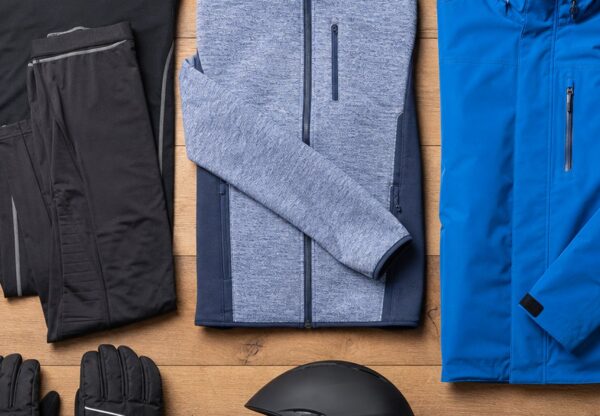
- Clothing: Layering is paramount. Avoid insulated alpine ski jackets and trousers, as you will quickly overheat. Think of dressing for winter running: a moisture-wicking base layer, a fleece or light insulated mid-layer, and a windproof, breathable softshell jacket and trousers. A warm hat, gloves, and sunglasses or goggles are also essential.
Getting Started and Staying Safe
While it is possible to teach yourself, the fastest and most effective way to learn is by taking a lesson. A qualified instructor will teach you the fundamentals of balance, weight transfer, and timing, which will prevent you from developing bad habits and accelerate your progress. Most Nordic ski centres offer group and private lessons.
Start on flat, easy terrain to build confidence before tackling gentle hills. Learning how to ascend using the ‘herringbone’ technique and descend in a controlled ‘snowplough’ are vital early skills for classic skiers. As you progress, you can explore longer, more varied trail networks.
While generally very safe on marked trails, it’s wise to take precautions. Always check the weather forecast and trail conditions before you set out. Let someone know your intended route and estimated return time. Even on short outings, carry a small pack with water, a snack, a mobile phone, and an extra warm layer. Be mindful of trail etiquette: follow directional signs, yield to faster skiers, and if you must walk, do so on the side of the trail, never on the classic tracks.
Where to Go Cross-Country Skiing
Excellent cross-country skiing can be found across the globe, often in the valleys below major alpine resorts. However, for the best experience, look for dedicated Nordic centres or regions renowned for the sport. Scandinavia is the spiritual home of cross-country, with vast, immaculately maintained networks in Norway, Sweden, and Finland. In the Alps, regions like Seefeld in Austria, the Dolomites in Italy (particularly the Alpe di Siusi/Seiser Alm), and the Jura mountains in France and Switzerland offer hundreds of kilometres of world-class trails.
Many resorts cater brilliantly to both alpine and Nordic skiers, providing a perfect holiday for mixed-ability groups. Finding a resort with good Nordic facilities is easy using a comprehensive ski resort directory, which can help you identify destinations with extensive trail systems. These locations typically offer excellent grooming, rental facilities, and instruction.
Ultimately, cross-country skiing is far more than just an alternative to downhill. It is a deeply rewarding sport that combines a formidable physical challenge with a serene immersion in the natural world. Accessible, versatile, and suitable for all ages, it offers a unique and fulfilling way to explore the mountains in winter.
FAQ
Is cross-country skiing difficult to learn?
The basics of the 'classic' style are quite intuitive and can be learned in a single lesson. 'Skate' skiing is more technically demanding and has a steeper learning curve, requiring better balance and fitness.
What kind of fitness is required for cross-country skiing?
The sport is highly scalable. A gentle tour on flat terrain is a light workout suitable for most people, while skiing at pace on hilly terrain is one of the most demanding cardiovascular exercises available. A basic level of fitness is helpful to start.
Do I need special clothes for cross-country skiing?
Yes. Standard alpine ski wear is too warm and bulky. It is best to dress in layers as you would for winter running: a moisture-wicking base layer, a fleece mid-layer, and a windproof softshell jacket and trousers.
Can I use my downhill ski poles for cross-country?
No, it is not practical. Cross-country poles are much longer and lighter as they are essential for propulsion, not just for balance. Classic poles typically reach your armpit, while skate poles are even longer, reaching your chin or nose.
What is the main difference between classic and skate skiing?
Classic skiing uses a forward striding and gliding motion within pre-set parallel tracks. Skate skiing uses a powerful side-to-side V-shaped motion on a wide, groomed trail, similar to ice skating, and is generally faster.
Is cross-country skiing expensive?
It is generally more affordable than alpine skiing. Trail passes for Nordic centres are often much cheaper than lift passes, and in many areas they are free. Equipment rental costs are also typically lower.