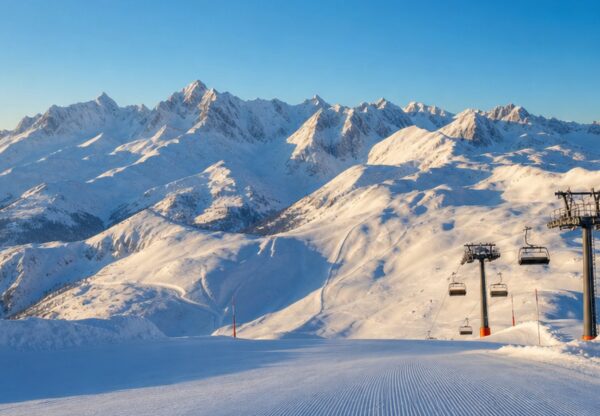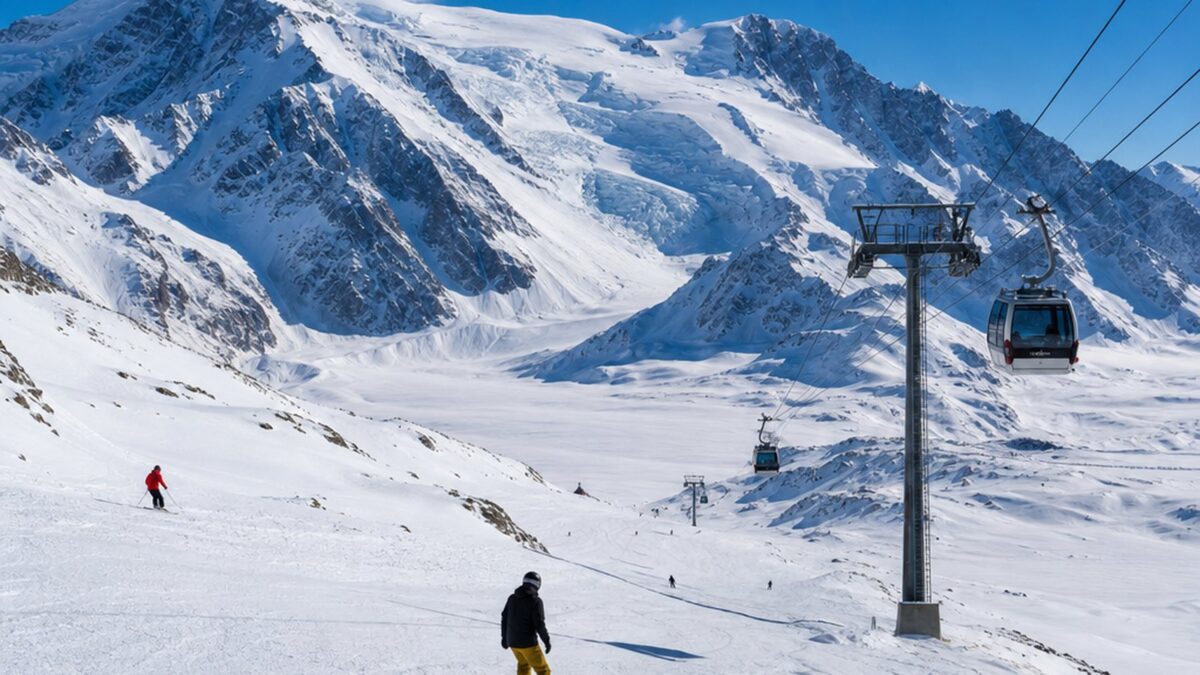
An Introduction to Tignes
Tignes and Val d’Isère combine to form one of the world’s premier high-altitude ski domains. Located in the Tarentaise Valley of the French Alps, this vast, interconnected area offers an exceptional snow sports experience, renowned for its extensive terrain, excellent snow record, and a season that stretches longer than almost any other in Europe. With 300 kilometres of pistes served by a modern network of 80 lifts, the scale is immense, providing seemingly endless opportunities for skiers and snowboarders of all abilities.
The two resorts at its heart, while sharing the same mountains, offer distinctly different characters. Val d’Isère is a historic alpine village, exuding traditional Savoyard charm with its stone-and-wood architecture, bustling centre, and sophisticated atmosphere. Tignes, by contrast, is a collection of purpose-built villages set at various altitudes, prized for its functional, ski-in, ski-out convenience and its direct access to the high-altitude slopes of the Grande Motte glacier. Together, they provide a complete package: the charm of the old, the convenience of the new, and a shared passion for mountain sports, all under a single lift pass.
The Skiing & Terrain
The ski area of Tignes is a high-altitude playground defined by its sheer scale and variety. The domain boasts a massive vertical drop of 1906 metres, descending from the breathtaking summit of the Grande Motte glacier at 3456 metres down to the village of Tignes Les Brévières at 1550 metres. This huge vertical ensures long, satisfying runs that traverse diverse mountain environments, from wide-open glacial bowls to sheltered, tree-lined pistes lower down.
The 300 kilometres of marked trails are thoughtfully balanced to cater for every level of skier:
- Easy Slopes (Greens & Blues): 165 km (55%)
- Intermediate Slopes (Reds): 75 km (25%)
- Advanced Slopes (Blacks): 60 km (20%)
This distribution makes the area particularly welcoming for developing skiers, with more than half the terrain dedicated to gentle cruising. However, the statistics also highlight the significant challenge available for experts, with 60 kilometres of demanding black runs and a world-famous reputation for lift-accessed off-piste. The modern and efficient lift system, comprising 80 lifts, is designed to move large numbers of people across the mountains with ease, minimising queues and maximising time on the snow. From the high-speed Funicular that whisks you to the Grande Motte glacier to the network of gondolas and chairlifts connecting the two resort valleys, the infrastructure is first-class.
Who It Suits
Beginners
Tignes is an excellent choice for beginners. With 165 kilometres of green and blue runs, there is a huge amount of gentle terrain to build confidence on. Both resorts have dedicated, free-to-use nursery slopes at village level. In Val d’Isère, the Solaise sector was redeveloped specifically with learners in mind, creating a superb high-altitude beginner zone with magic carpets and slow-moving chairlifts. In Tignes, the areas around Le Lac and Val Claret offer wide, gentle slopes perfect for first turns. Once comfortable, beginners can progress to the network of long, cruising blue runs that connect the wider area.
Intermediates
For intermediates, this ski area is paradise. The sheer quantity of long, sweeping blue and red runs is staggering. It’s possible to spend a week here and never ski the same run twice. Intermediates can confidently explore the entire 300-kilometre domain, travelling between the two resorts and enjoying the change in scenery. Highlights include the long descent from the Grande Motte glacier, the cruisy red runs in the Bellevarde sector, and the scenic pistes leading down to the Fornet area in Val d’Isère. The 75 kilometres of red runs provide the perfect pitch for honing carving technique and building speed.
Advanced & Experts
Advanced skiers and snowboarders will find more than enough to challenge them. The 60 kilometres of black pistes include some of the most formidable runs in the Alps. The most famous is ‘La Face de Bellevarde’ in Val d’Isère, the dauntingly steep 1992 Olympic men’s downhill course that plunges directly into the village. Other classic challenges include the Sache black run down to Tignes Les Brévières, a long, leg-burning descent through the trees. Beyond the pistes, the area is a legendary off-piste destination. The lift-accessed backcountry is vast and varied, offering everything from open powder fields to steep couloirs and technical descents. Hiring a local guide is highly recommended to safely explore this incredible terrain.
Highlights & Special Features
What truly sets Tignes apart is its combination of high-altitude snow security and immense scale. The area’s unique selling points make it a perennial favourite among dedicated skiers.
- The Grande Motte Glacier: Towering above Tignes at 3456m, the glacier is the key to the area’s snow guarantee. It offers skiing not only from autumn through to late spring but also during the summer months, a rare feature in the Alps. The views from the top are panoramic and unforgettable.
- Two Resorts, One Pass: The ability to ski between the traditional, chic village of Val d’Isère and the modern, convenient hubs of Tignes offers an incredible variety of experiences. You can enjoy lunch in a rustic mountain hut above Val d’Isère and finish your day with an après-ski session in lively Tignes Val Claret.
- World-Class Off-Piste: The domain is globally recognised for its easily accessible off-piste and backcountry terrain. From the moment you step off a lift, countless opportunities for fresh tracks present themselves, catering for those new to powder and seasoned experts alike.
- Legendary Pistes: For those who love a challenge, skiing an Olympic course is a true highlight. Conquering the steep pitch of La Face de Bellevarde is a badge of honour for any expert skier visiting Val d’Isère.
Ski Season & Snow Reliability
Tignes is one of the most snow-sure ski destinations in Europe. Its reliability is built on a foundation of high altitude. The base villages sit at 1550m (Tignes Les Brévières) and 1850m (Val d’Isère), with the majority of the skiing taking place well above 2000m. The highest lift reaches a staggering 3456m on the Grande Motte glacier.
This elevation ensures that cold temperatures and natural snowfall are consistent throughout a very long winter season, which typically runs from late November until the first week of May. The presence of two glaciers—the Grande Motte in Tignes and the Pissaillas in Val d’Isère—provides an extra layer of security, guaranteeing skiable snow cover even in leaner snow years. This exceptional snow record makes it a safe bet for early and late-season ski trips when lower resorts may be struggling for coverage.
Getting There
By Air
The most common way to reach the area is by flying. The four main airports are Chambéry (CMF), Geneva (GVA), Lyon (LYS), and Grenoble (GNB). Chambéry is the closest but serves fewer flights. Geneva is the most popular international gateway, with a transfer time of approximately 3 hours by road. Numerous shuttle bus and private transfer companies operate services from all airports directly to the resort villages.
By Train
The train is an excellent and sustainable travel option. The nearest railway station is Bourg-Saint-Maurice, located in the valley floor. During the winter, direct high-speed trains (including the Eurostar from London) run to Bourg-Saint-Maurice. From the station, it is a 40-50 minute bus or taxi journey up the mountain to either Tignes or Val d’Isère.
By Car
Driving to the resort is straightforward, with motorway access for much of the journey. However, the final ascent from Bourg-Saint-Maurice is a mountain road that requires caution. It is a legal requirement in winter to carry snow chains or be fitted with winter tyres. Be sure to check road conditions before you travel, especially during periods of heavy snowfall.
Practical Tips for Visiting
Lift Passes
A day pass for the full Tignes area costs around €75. For stays of more than a day, multi-day and weekly passes offer significantly better value and can be purchased online in advance or at the ticket offices in the resort. The single pass gives you access to all 300km of pistes and 80 lifts across both resorts.
Accommodation & Villages
Choose your base village carefully to suit your preferences. Val d’Isère offers a charming, traditional town atmosphere with a wide range of hotels, chalets, and apartments. In Tignes, the accommodation is spread across five villages: Val Claret (2300m) and Le Lac (2100m) are the highest and most lively; Le Lavachet is slightly quieter; while Tignes 1800 (Les Boisses) and Les Brévières (1550m) offer more traditional, family-friendly bases at a lower altitude.
Navigating the Area
The ski area is vast, so grabbing a piste map is essential on your first day. Free and frequent bus services run within both Val d’Isère and Tignes, connecting the different villages and accommodation areas, making it easy to get around without a car in the evening.
Altitude Awareness
With the villages and much of the skiing at high altitude, it’s important to allow your body to acclimatise. Take it easy on your first day, stay well-hydrated by drinking plenty of water, and avoid excessive alcohol to minimise the effects of the altitude.