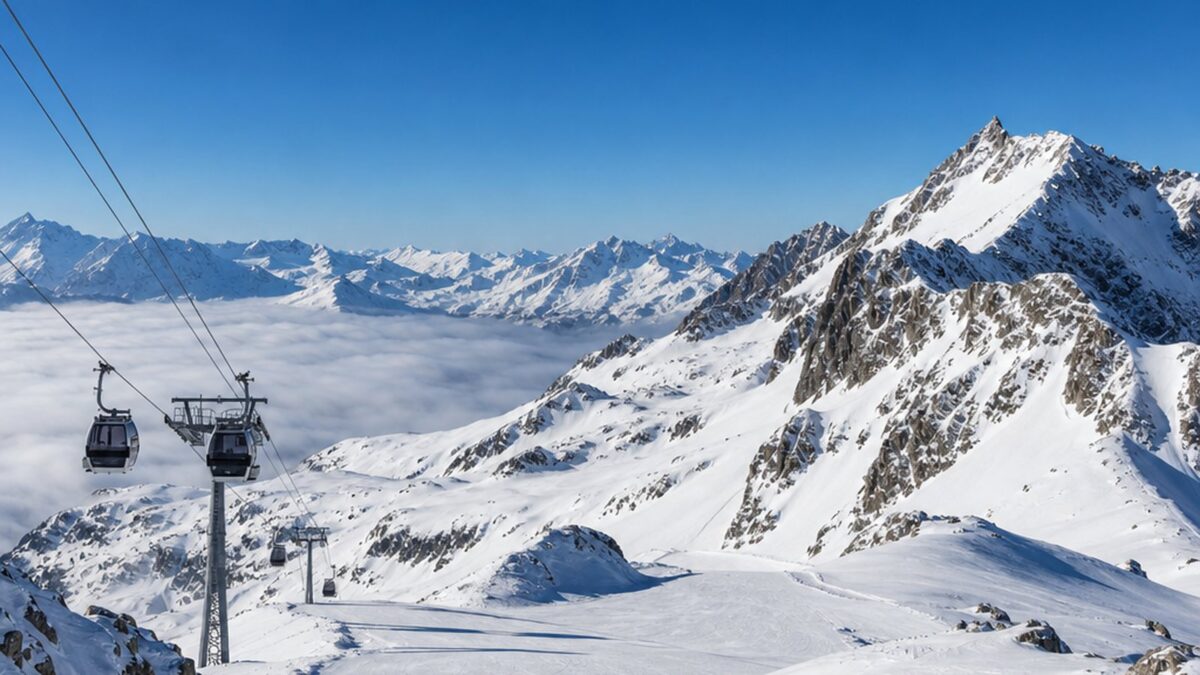
An Introduction to Big Sky Resort
Located in the Rocky Mountains of southern Montana, Big Sky Resort lives up to its name with a vast and varied ski area that feels boundless. Known for its tagline, ‘The Biggest Skiing in America®’, the resort combines immense terrain with a notable lack of crowds, offering skiers and snowboarders a sense of freedom and exploration rarely found elsewhere. With the iconic Lone Peak as its centrepiece, Big Sky delivers dramatic scenery, reliable snowfall, and a world-class mountain experience.
The Ski Area and Terrain
Big Sky Resort boasts an impressive 250 kilometres of marked pistes, served by a modern network of 40 lifts. The scale of the resort is immediately apparent from its statistics. The ski area rises from a base elevation of 2,073 metres to a breathtaking summit at 3,403 metres, providing a substantial vertical drop of 1,330 metres. This ensures long, satisfying descents and excellent snow preservation at higher altitudes.
The terrain is well-distributed to cater for all levels:
- Easy: 53 km of green runs provide ample space for newcomers to build confidence.
- Intermediate: 150 km of blue runs make up the majority of the terrain, offering endless cruising and progression opportunities.
- Hard: 47 km of black runs challenge advanced skiers, but the resort’s reputation is truly built on its expert terrain beyond the marked pistes.
The terrain off the Lone Peak Tram is legendary, offering some of the most challenging in-bounds skiing in North America, with steep couloirs, open bowls, and technical chutes.
Who is Big Sky Resort For?
Big Sky’s sheer size means it has something for everyone. Beginners will find dedicated learning zones at the Mountain Village base area, with gentle slopes and magic carpets. The progression from easy greens to long, wide-open blue runs is seamless.
Intermediates are arguably the best served, with a massive 150 kilometres of blue terrain to explore. From perfectly prepared groomers to rolling cruisers with stunning views, there is more than enough to keep intermediate skiers entertained for a week or more.
Advanced and expert skiers are drawn to Big Sky for the challenges offered by Lone Peak. The marked black runs are just the beginning. The resort’s extensive off-piste, gladed tree runs, and extreme terrain accessible via the tram provide a true test of skill and nerve.
Families will appreciate the variety of terrain that allows groups of mixed abilities to ski together, as well as the convenient amenities and services available in the pedestrian-friendly Mountain Village.
Season and Snowfall
Big Sky benefits from its high elevation and location in the Northern Rockies, which typically results in a long and reliable ski season. The resort usually opens in late November and runs through to late April. It is renowned for receiving consistent, light, and dry ‘cold smoke’ powder, with the high-altitude slopes preserving snow quality throughout the winter months.
Practical Information
Getting to Big Sky is straightforward. The nearest airport is Bozeman Yellowstone International Airport (BZN), located about an hour’s drive from the resort. A range of shuttle services and car hire options are available.
The resort’s hub is the Mountain Village, which offers a wide selection of ski-in, ski-out accommodation, restaurants, and shops. Further lodging can be found in the nearby Meadow Village and the town of Big Sky itself.
A single-day lift pass can cost around €245, though prices vary depending on the time of season and how far in advance they are purchased. It is always advisable to check the resort’s official website for the most current pricing and to purchase in advance for the best rates.