What Are Ski Poles Used For? A Complete Guide
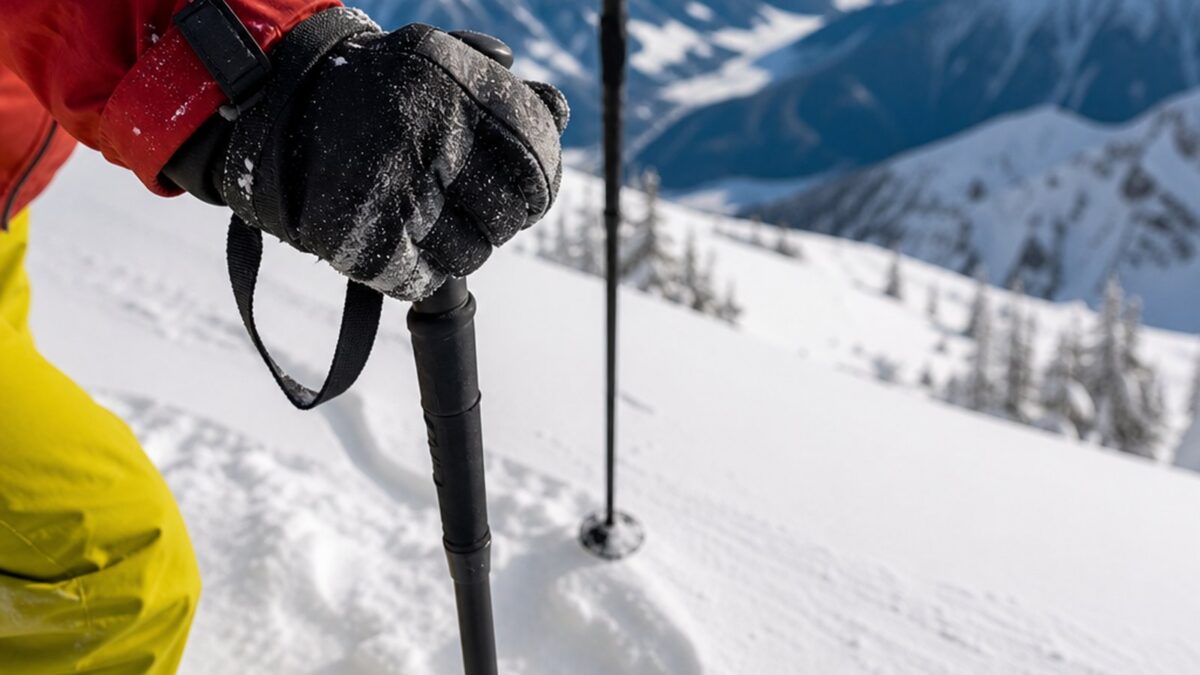
The Essential Functions of Ski Poles
For those new to skiing, poles can often feel like an awkward accessory. It’s common to see first-timers struggling to coordinate them, leading many to wonder if they are necessary at all. However, for an accomplished skier, poles are indispensable tools that serve several critical functions beyond simply pushing along flat ground. They are integral to rhythm, balance, and efficiency across varied terrain.
Timing and Rhythm
Perhaps the most important role of a ski pole for an intermediate or advanced skier is to establish timing and rhythm. The coordinated movement of planting a pole at the initiation of each turn is a cornerstone of modern ski technique. A well-timed ‘pole plant’ acts as a metronome, setting the pace for a series of linked turns. This action helps to stabilise the upper body, keeping it facing down the fall line while the lower body rotates the skis underneath. This separation of upper and lower body is key to maintaining control and executing smooth, carved turns.
Balance and Stability
Ski poles provide two additional points of contact with the snow, significantly enhancing a skier’s balance. When stationary, waiting for a friend, or navigating a tricky, slow-speed section, they act like a tripod to keep you steady. While skiing, they are crucial for recovering from minor imbalances. A quick tap of a pole can prevent a small wobble from turning into a fall. This is especially true in challenging conditions like ice, moguls, or deep powder where the snow surface is unpredictable.
Propulsion and Utility
The most obvious use for ski poles is propulsion. They are essential for navigating the flat sections that link ski runs or for getting through long, slow lift queues. Pushing with the poles uses upper body strength, saving leg energy for the downhill sections. They are also invaluable for helping a skier stand up after a fall. By planting both poles firmly in the snow, a skier can use them as leverage to push themselves back into an upright position.
How to Use Poles in Different Skiing Scenarios
The way a skier uses their poles changes depending on the terrain and the type of skiing they are doing. Mastering these subtle differences is a mark of a versatile and skilled skier.
On Groomed Pistes
For carving turns on groomed slopes, the pole plant is a light, precise movement. As you prepare to turn, you swing the downhill pole forward and tap its tip into the snow just ahead of your boot. This is not a heavy, supportive lean, but a quick touch that signals the start of the new turn. The action helps to unweight the skis for a moment, making it easier to initiate the turn and engage the new edges.
In Moguls and Bumps
In mogul fields, poles become vital for balance and control. The pole plant should occur on the top of the mogul you are about to ski around. This provides a stable pivot point, allowing you to quickly turn your skis in the trough on the other side. The rhythm is quick and constant, with the hands kept forward to maintain a balanced, aggressive stance.
Off-Piste and Powder
In deep powder, poles provide crucial stability in the soft, unpredictable snow. Skiers use poles with larger ‘powder baskets’ to prevent them from sinking too deep. The pole plant is often more deliberate, used to test the snow ahead and to provide a solid anchor for balance during deep turns. In steep, technical off-piste terrain, they can also be used to perform stationary pivot turns or to provide support while side-stepping.
Ski Touring
For ski touring or backcountry skiing, poles are fundamental for uphill propulsion. During the ‘skinning’ phase, skiers use a long, gliding motion with their skis, pushing off with their poles in an alternating rhythm, similar to cross-country skiing. This engages the upper body and core, distributing the effort and making the ascent more efficient. Adjustable-length poles are standard for touring, as a longer length is preferred for uphill travel and a shorter length for the descent.
When Not to Use Ski Poles
Despite their importance, there are specific situations where skiing without poles is beneficial or even safer.
First-Time Skiers
Ski instructors almost always teach complete beginners without poles. The initial focus is on developing fundamental balance, learning to control speed with wedges (snowploughs), and getting a feel for how the skis and edges work. Introducing poles too early can be a distraction, leading to a reliance on them for balance instead of developing core stability and proper leg movements.
Freestyle and Park Skiing
In terrain parks, many skiers choose to use very short poles or no poles at all. During jumps, grabs, and rail slides, poles can easily get caught, leading to dangerous falls and injuries. Removing them from the equation allows for greater freedom of movement for aerial manoeuvres and rotations.
Choosing the Right Ski Poles
Selecting the correct poles is straightforward but important for comfort and technique.
- Sizing: To find the right length, turn a pole upside down and hold it underneath the basket. If your elbow is at a 90-degree angle, the pole is the correct size. Some skiers prefer slightly shorter poles for moguls or park, and adjustable poles are ideal for touring.
- Material: Most poles are made from aluminium, which is durable, affordable, and tends to bend rather than break on impact. Higher-end poles are made from carbon fibre, which is significantly lighter and stiffer, reducing swing weight. However, they are more expensive and can shatter under a strong impact.
- Features: Look at the grips for comfort and the straps for utility. Some modern poles feature safety-release straps that detach under pressure, which can prevent wrist or shoulder injuries in a fall, particularly when skiing in trees. Finally, ensure the basket is appropriate for your typical ski conditions—small for pistes, large for powder.
FAQ
Do beginner skiers really need poles?
While instructors often start beginners without poles to help them focus on balance and leg control, they are introduced fairly early. Poles are essential for navigating flat areas and lift lines, and later become crucial for learning the timing and rhythm of parallel turns.
How do I know what size ski poles to get?
The standard method is to flip the pole upside down, stand it on the floor, and grip it just underneath the basket. Your elbow should form a roughly 90-degree angle. If you ski mostly park or moguls, you might prefer a slightly shorter pole.
What is a 'pole plant' in skiing?
A pole plant is the action of lightly tapping the tip of the ski pole into the snow just before starting a turn. Its main purpose is not to push off, but to establish rhythm, aid timing, and help keep the upper body stable and facing downhill.
Why do some skiers not use the straps on their poles?
In certain conditions, like tree skiing or avalanche terrain, not using straps is a safety precaution. If a pole gets snagged on a branch or buried in deep snow during a fall, releasing it easily can prevent a serious shoulder, arm, or wrist injury.
Are expensive carbon ski poles worth the money?
For most recreational skiers, durable aluminium poles are perfectly sufficient. Carbon poles are lighter, which reduces fatigue and makes them easier to swing, a benefit for experts, racers, and ski tourers. However, they are more costly and can shatter, whereas aluminium poles usually just bend.
What is the purpose of the basket on a ski pole?
The basket is the plastic disc near the tip of the pole. Its purpose is to prevent the pole from sinking too deep into the snow. Smaller baskets are designed for skiing on firm, groomed pistes, while larger 'powder baskets' provide more surface area for flotation in soft, deep snow.