How Many Calories Does Skiing Burn? A Guide
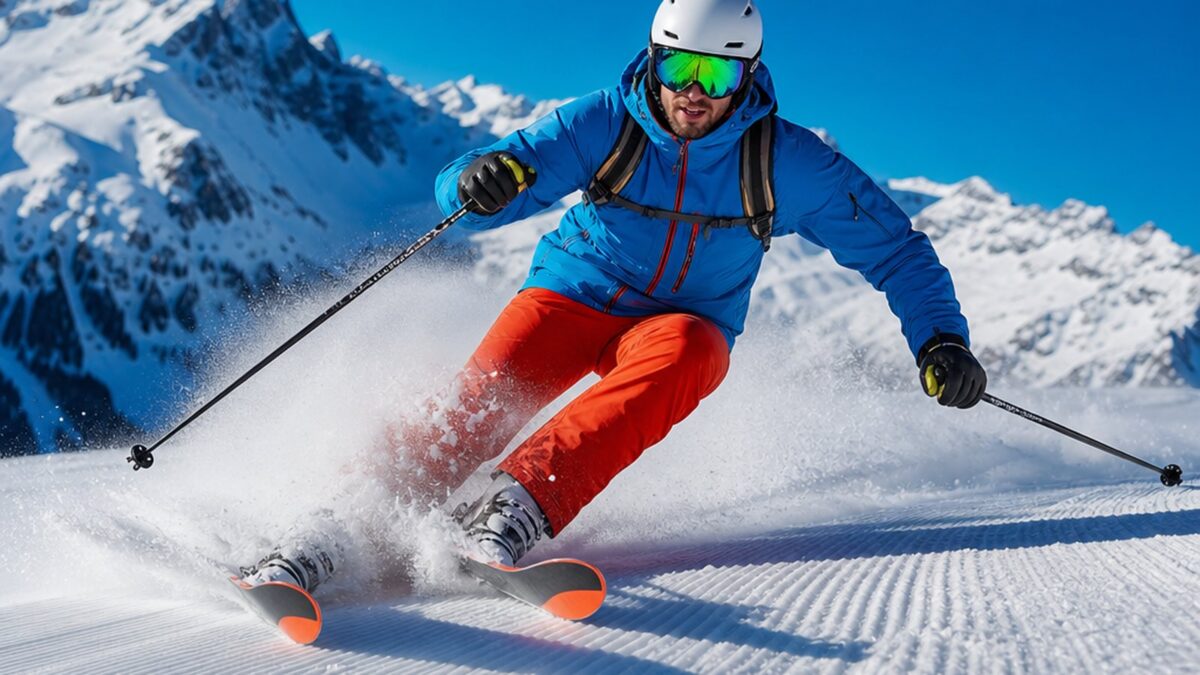
Is Skiing a Good Workout?
Beyond the stunning mountain scenery and exhilarating speed, skiing is a formidable full-body workout. It engages major muscle groups, challenges your balance and core stability, and provides a significant cardiovascular workout without the high impact of activities like running. From your leg muscles powering through turns to your core keeping you stable over uneven terrain, skiing demands both strength and endurance. This high level of physical exertion naturally leads to a significant calorie burn, making it one of the most enjoyable ways to stay fit during the winter months.
Calculating Your Calorie Burn on the Slopes
The question of exactly how many calories skiing burns doesn’t have a single answer. The final number depends on a wide range of variables, including your body weight, the intensity of your skiing, and the type of skiing you’re doing. However, we can establish some reliable estimates to give you a clear idea of the energy you’re expending.
Downhill Skiing Calorie Burn
For most recreational skiers enjoying a day on the pistes, the calorie burn is substantial. On average, an hour of active downhill skiing can burn between 300 and 600 kilocalories (kcal). It’s important to note that this figure applies to the time spent actively skiing down the mountain, not the time spent on chairlifts, waiting for friends, or enjoying a hot chocolate at a mountain restaurant.
An average-sized man might burn around 500 kcal per hour, while an average-sized woman might burn closer to 400 kcal per hour, primarily due to differences in average body weight.
Key Factors Influencing Calorie Burn
Several factors can push your personal calorie burn towards the lower or higher end of this range:
- Body Weight: A heavier person requires more energy to move their body, and will therefore burn more calories than a lighter person performing the same activity.
- Intensity and Terrain: Aggressively skiing challenging black runs or navigating bumpy mogul fields requires far more muscular effort and control than making gentle, cruising turns on a wide blue piste. The harder you push yourself, the more energy you will use.
- Temperature: Skiing in cold weather forces your body to work harder to maintain its core temperature. This process, known as thermoregulation, burns additional calories. So, that shiver is actually part of the workout!
- Skill Level: While experts are more efficient, they often ski faster and on more demanding terrain, leading to a high calorie burn. Beginners, on the other hand, may use more energy through less efficient movements and constant muscle tension as they learn to control their skis.
Cross-Country vs. Downhill Skiing
When it comes to pure calorie-burning potential, cross-country (or Nordic) skiing is in a league of its own. Because it involves propelling yourself across flat and uphill terrain without the help of gravity, it is an intense, full-body cardiovascular workout. An average person can expect to burn around 600 kcal per hour at a moderate pace, while elite athletes can burn in excess of 1,300 kcal per hour during intense training or racing.
Balancing Holiday Feasts with Skiing Fitness
One of the great joys of a ski holiday is indulging in the local mountain cuisine. Hearty fondues, rich tartiflettes, and delicious pastries are all part of the experience. The good news is that the high energy expenditure from skiing creates plenty of room for these treats.
To put it in perspective, a typical adult might burn between 1,800 and 2,500 kcal on a normal sedentary day. Let’s do some simple maths. If you ski for four active hours during the day, you could burn an additional 1,600 calories (4 hours x 400 kcal/hour). This is a significant increase in your daily energy budget, easily covering a generous portion of cheese fondue (around 700 kcal) and a few glasses of wine at après-ski.
While the extra calorie allowance is a welcome bonus, it’s also wise to think about nutrition for performance. Consuming complex carbohydrates will provide sustained energy for a long day on the slopes, while protein is essential for muscle repair and recovery overnight, ensuring your legs are ready for the next day.
A Quick Guide to Energy Units
When discussing energy from food, you’ll encounter two main units: calories and kilojoules. Understanding them makes reading nutrition labels anywhere in the world much easier.
- Calories (kcal): When people talk about the ‘calories’ in food, they are almost always referring to kilocalories, abbreviated as ‘kcal’. A kilocalorie is the amount of energy required to heat one kilogram of water by one degree Celsius. This is the standard unit used in the UK, Europe, and North America.
- Kilojoules (kJ): The kilojoule is the metric unit for energy, commonly seen on food labels in countries like Australia and New Zealand. The conversion is straightforward: 1 kcal is equal to approximately 4.2 kJ.
Both units measure the same thing—the energy your body gets from food and drink. Skiing provides an excellent opportunity to put that energy to good use.
FAQ
How many calories does one hour of downhill skiing burn?
On average, one hour of active downhill skiing burns between 300 and 600 calories. The exact amount depends on factors like your body weight, the intensity of your skiing, and the difficulty of the terrain.
Does snowboarding burn more calories than skiing?
The calorie burn for skiing and snowboarding is very similar, typically falling within the same 300-600 calorie per hour range. Snowboarding may engage the core muscles more consistently, while skiing can be more demanding on the thighs and glutes, but the overall energy expenditure is comparable.
Is cross-country skiing a better workout than downhill skiing?
From a purely cardiovascular and calorie-burning perspective, yes. Cross-country skiing is a more intense full-body workout as you propel yourself forward, burning 600-1300 calories per hour, significantly more than downhill skiing.
Do you burn calories while riding a ski lift?
Riding a ski lift burns a minimal number of calories, equivalent to your body's basic metabolic rate while sitting down. The significant calorie burn occurs during the active descent down the mountain.
How can I maximise my calorie burn while skiing?
To increase your calorie burn, focus on skiing more intensely. Choose more challenging terrain like black runs or mogul fields, minimise the length of your stops, and focus on making powerful, dynamic turns. The more time you spend actively moving, the more energy you will expend.
Does cold weather make you burn more calories when skiing?
Yes, your body uses extra energy to stay warm in cold conditions, a process called thermoregulation. This increases your overall calorie burn, though it's still important to dress in appropriate layers for safety and comfort.