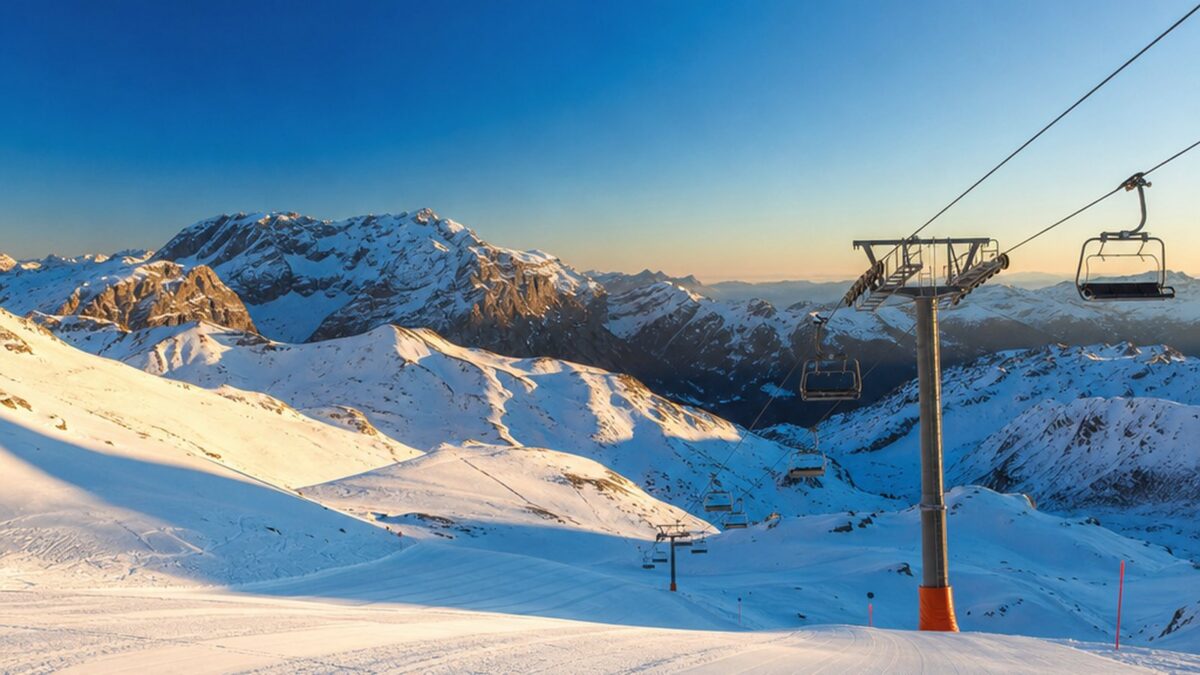
An Introduction to Via Lattea
The Via Lattea, or ‚Milky Way‘, is one of the world’s largest and most impressive ski domains, straddling the border between Italy and France. This vast network offers an incredible 400 kilometres of interconnected pistes, linking the Italian resorts of Sestriere, Sauze d’Oulx, San Sicario, and Claviere with Montgenèvre in France. Famed for hosting the alpine skiing events of the 2006 Turin Winter Olympics, the area combines high-altitude efficiency with traditional alpine charm. Each village offers a distinct character, from the lively, tree-lined slopes of Sauze d’Oulx to the purpose-built convenience of Sestriere, providing a diverse experience for every type of skier.
The Skiing and Terrain
With a staggering 400 km of marked slopes served by 70 lifts, the scale of Via Lattea is its main attraction. The ski area spans a significant vertical range, rising from a base elevation of 1,538 metres to a top height of 2,789 metres, offering a total vertical drop of 1,251 metres. The terrain is exceptionally varied and caters well to all abilities, though it particularly excels for intermediates.
- Easy slopes: 96 km (Blue)
- Intermediate slopes: 220 km (Red)
- Advanced slopes: 84 km (Black)
The piste network allows for fantastic long-distance ski journeys, including the popular day trip across the border into France. Sestriere is known for its wide, open, high-altitude bowls, while Sauze d’Oulx features beautiful runs that wind through larch forests. The connections between the resorts are generally seamless, allowing skiers to explore a new area each day without ever repeating a run.
Who It Suits
The Via Lattea’s sheer size and variety make it an excellent choice for a wide range of skiers. Intermediates are arguably the best catered for, with over half the terrain (220 km) designated as red runs. The long, cruising pistes that connect the different valleys are perfect for building confidence and covering serious distance. Beginners will find excellent nursery slopes in all the main villages, with Sestriere and Montgenèvre offering particularly good, wide-open learning zones. The 96 km of blue runs provide ample opportunity for progression. For advanced skiers, the 84 km of black runs include challenging Olympic courses, such as the Kandahar Banchetta downhill run in Sestriere. The area is also renowned for its extensive and easily accessible off-piste terrain, especially from the higher lifts above Sestriere and Sauze d’Oulx.
Season and Snow Reliability
The ski season in Via Lattea typically runs from early December through to mid-April. Its snow record is generally reliable, thanks in large part to the high altitude of the domain. Sestriere, in particular, sits at over 2,000 metres, making it one of the highest resorts in Europe and ensuring good snow cover throughout the winter. The area is also supported by a comprehensive snowmaking system that covers many of the key linking pistes, guaranteeing access across the network even in leaner snow years. The lower, tree-lined runs offer shelter and better visibility during poor weather conditions.
Practical Tips for Visiting
The most convenient gateway to the Italian side of the Via Lattea is Turin (Torino) Airport, with transfers to the main resorts taking approximately 90 minutes. A single Via Lattea lift pass grants access to the entire 400 km network, including the French resort of Montgenèvre. When choosing a base, consider the atmosphere you prefer: Sauze d’Oulx is famous for its vibrant village and lively après-ski scene, Sestriere offers ski-in-ski-out convenience and a more modern feel, while Claviere provides a quieter, more traditional Italian village experience. When planning a cross-border ski day, always check the weather forecast and lift closing times to ensure a smooth return journey.