An Introduction to La Plagne
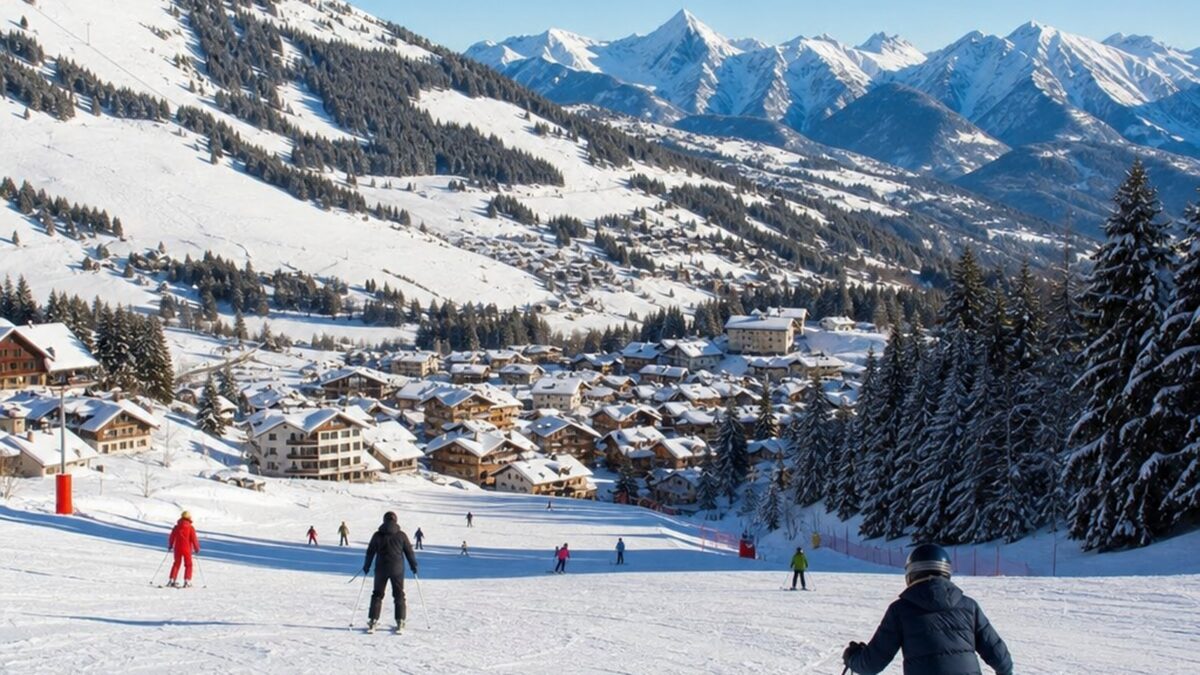
La Plagne is one of the world’s most popular and expansive ski resorts, located in the Tarentaise Valley of the French Alps. It is not a single village but a collection of eleven distinct resort centres, spread across a vast, high-altitude plateau and its surrounding valleys. These villages range from modern, purpose-built hubs offering ultimate ski-in/ski-out convenience to traditional, charming Savoyard hamlets lower down the mountain. This unique structure means La Plagne offers a diverse range of atmospheres and accommodation styles to suit every taste and budget.
As a key component of the immense Paradiski ski domain, La Plagne is linked to the neighbouring resorts of Les Arcs and Peisey-Vallandry by the iconic Vanoise Express double-decker cable car. While the full Paradiski area boasts over 425 kilometres of pistes, La Plagne’s local ski area is a giant in its own right, with 225 kilometres of varied terrain. Renowned for its wide, gentle intermediate pistes, excellent family facilities, and reliable snow cover, La Plagne has cemented its reputation as a world-class destination for recreational skiers and families.
The Skiing & Terrain in La Plagne
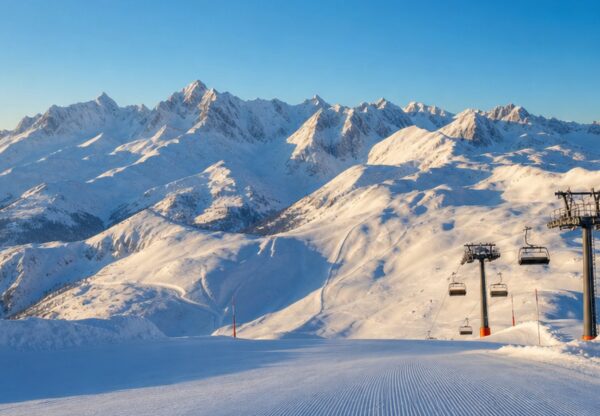
The scale of the skiing in La Plagne is truly impressive, offering something for all abilities across its vast network of slopes. The ski area features a significant vertical drop of 1960 metres, descending from the high point on the Bellecôte Glacier at 3167 metres down to the lowest village of Montchavin at 1207 metres. This huge range in altitude provides both snow security and a fantastic variety of terrain.
The piste network is served by 74 modern and efficient lifts, designed to move skiers seamlessly across the mountainside. The breakdown of the 225 kilometres of marked runs reveals why the resort is so popular with intermediates and those learning the ropes:
- Easy Slopes (Greens & Blues): 139 km
- Intermediate Slopes (Reds): 59 km
- Difficult Slopes (Blacks): 27 km
The majority of the terrain consists of wide, confidence-building blue runs that criss-cross the main bowl above the high-altitude villages. This makes it an ideal playground for skiers looking to cruise and cover long distances. The upper slopes, particularly around the Bellecôte Glacier and the Roche de Mio sector, are open and above the treeline, offering breathtaking panoramic views. Lower down, the runs leading towards Montchavin-Les Coches and Champagny en Vanoise are beautifully set amongst forests, providing excellent shelter and visibility during poor weather conditions.
Who is La Plagne Best For?
Beginners
La Plagne is an exceptional choice for first-time skiers. With a staggering 139 kilometres of easy slopes, the resort is a paradise for learning. Each village has its own dedicated beginner zones with gentle magic carpet and drag lifts, allowing novices to build confidence in a safe environment. Once comfortable, the progression onto the vast network of long, wide blue runs is seamless and enjoyable.
Intermediates
Intermediate skiers will feel like they have hit the jackpot in La Plagne. The resort is perfectly geared towards those who love to cruise on blues and reds. The sheer mileage available means you can ski all day without repeating a run. Classic routes include the long descent from Roche de Mio to the village of Champagny, or the scenic runs through the trees to Montchavin. For those seeking more of a challenge, the 59 kilometres of red pistes provide a good step up without being overly intimidating.
Advanced & Expert Skiers
While La Plagne’s reputation is built on its intermediate terrain, there is still plenty to keep advanced skiers entertained. The 27 kilometres of black runs are primarily found on the higher, steeper slopes of the Bellecôte Glacier. Runs like the Emile Allais and the Morbleu offer genuine challenges. Furthermore, the glacier is the gateway to some of the Tarentaise’s most renowned off-piste itineraries. For even more variety, a Paradiski pass opens up the legendary expert terrain of Les Arcs, including the Aiguille Rouge peak.
Families
La Plagne is consistently ranked as one of the best family ski resorts in Europe. The convenience of ski-in/ski-out accommodation in the purpose-built villages is a major advantage, minimising hassle and time spent carrying equipment. The resort is well-equipped with excellent ski schools, childcare facilities, and a host of non-skiing activities. The gentle nature of the slopes means families can happily ski together and explore the vast area with confidence.
When to Ski: Season and Snow Conditions
Thanks to its high altitude, La Plagne boasts a long and snow-sure season, typically running from early December until late April. The majority of the ski area sits above 2000 metres, ensuring that cold temperatures and good snow cover are maintained throughout the winter. The Bellecôte Glacier, at over 3000 metres, provides guaranteed skiing even during the warmest periods of the season.
The resort is also equipped with an extensive network of snow cannons on key pistes, particularly on the lower slopes returning to the villages. This helps to ensure top-to-bottom skiing is possible for the entire season. January typically offers the best powder conditions, while March and April bring milder temperatures, sunny skies, and fantastic spring skiing conditions.
Resort Highlights and Unique Features
A Resort of Many Villages
La Plagne’s most unique characteristic is its multi-village structure. Visitors can choose the modern, functional convenience of high-altitude stations like Plagne Centre, Belle Plagne, or Aime 2000, or opt for the traditional alpine charm of Champagny en Vanoise and Montchavin-Les Coches. This variety allows the resort to cater to a wide range of preferences and creates distinct atmospheres across the domain.
The Olympic Bobsleigh Track
A legacy of the 1992 Albertville Winter Olympics, the bobsleigh track in La Plagne is a must-see attraction. For the truly adventurous, it offers the chance to experience the thrill of a descent firsthand. Visitors can choose between a self-steering bob raft, a speed luge, or the ultimate experience: a ride with a professional pilot, reaching speeds of over 120 km/h.
The Vanoise Express
This remarkable double-decker cable car is an engineering marvel, spanning the valley between La Plagne and Les Arcs without any supporting pylons. A ride on the Vanoise Express is an experience in itself, offering stunning views as it connects the two halves of the Paradiski area in just four minutes.
Spectacular Panoramas
From the highest points of the resort, the views are simply breathtaking. On a clear day from the top of the Bellecôte Glacier or the Grande Rochette peak above Plagne Centre, you can enjoy a 360-degree panorama that includes Mont Blanc, the Pierra Menta, and the vast expanse of the Vanoise National Park.
How to Get to La Plagne
By Air
The most common way to reach La Plagne is by flying into one of the four main airports in the region. The closest is Chambéry (CMF), located about 1.5 to 2 hours away by road. Geneva (GVA), Lyon (LYS), and Grenoble (GNB) are larger international airports offering more flight options, with transfer times of approximately 2.5 to 3 hours. Numerous companies offer shared and private airport transfers directly to the resort villages.
By Train
The train is an excellent and sustainable travel option. High-speed TGV services from Paris and the Eurostar from London run directly to Aime-La Plagne, the station located in the valley below the resort. From the station, regular bus services and taxis are available to take you up the mountain to your chosen village, a journey of around 30-45 minutes.
By Car
Driving to La Plagne is a popular choice for those who value flexibility. The resort is easily accessible via the French motorway network. From the UK, the drive is approximately 9-10 hours from Calais. It is a legal requirement to carry snow chains or be fitted with winter tyres for the final mountain ascent. Parking is available in all villages, though it is often payable in covered car parks.
Practical Information for Your Visit
Lift Passes
Visitors have two main choices for lift passes. The La Plagne pass provides access to the entire 225 km local area, which is more than sufficient for most skiers on a week-long holiday. For those who want to explore further, the full Paradiski pass includes Les Arcs and Peisey-Vallandry. A single-day pass for the local La Plagne area costs around €70, with discounts available for multi-day passes, children, and seniors.
Getting Around
During the day, the ski lift system is the best way to travel between villages. In the evenings, a free and reliable network of shuttle buses connects the high-altitude resorts (from Plagne 1800 up to Plagne Villages/Soleil and Belle Plagne), making it easy to visit other villages for dinner or après-ski.
Accommodation
The resort offers a vast range of lodging, from budget-friendly self-catered apartments in the purpose-built blocks of Aime 2000 and Plagne Centre to catered chalets, hotels, and all-inclusive clubs. The sheer number of options ensures there is something to suit every group size and budget.