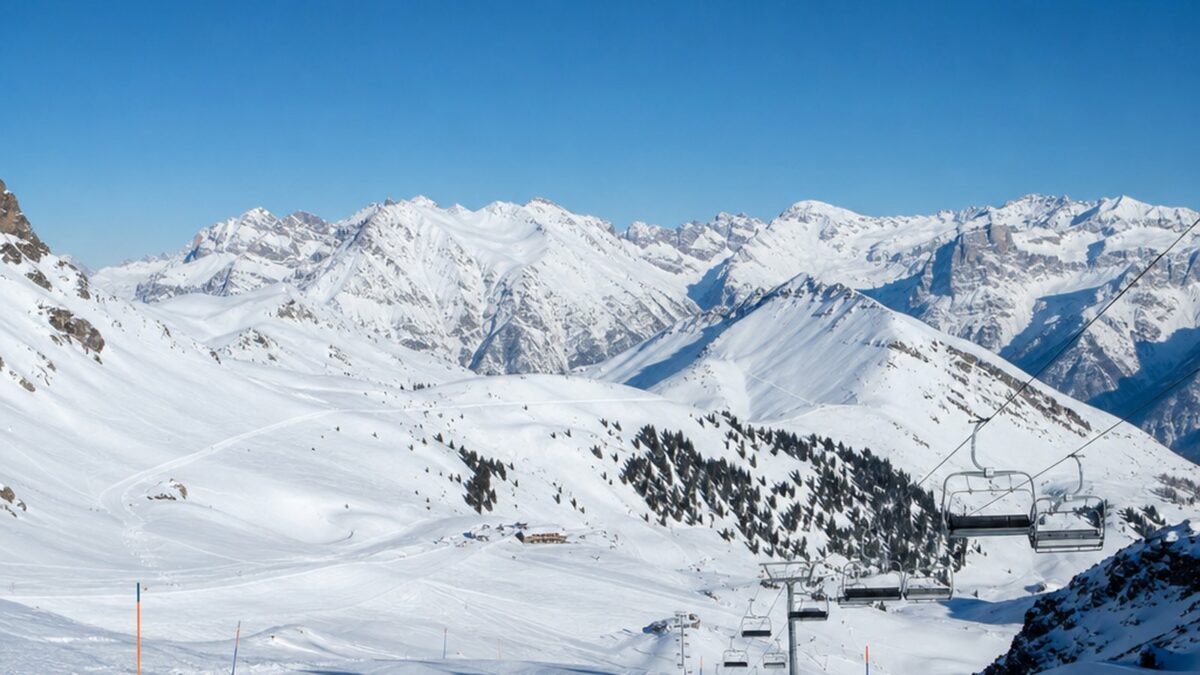
An Introduction to the Ischgl
The Ischgl is one of the largest and most impressive ski domains in the Alps, uniquely linking the lively Austrian resort of Ischgl with the tranquil, duty-free Swiss village of Samnaun. This vast cross-border ski area offers a high-altitude playground renowned for its modern lift system, extensive piste network, and reliable snow conditions. With terrain stretching across two countries, skiers can enjoy a varied experience, from the vibrant atmosphere on the Austrian side to the scenic, quieter slopes on the Swiss side.
Skiing and Terrain in Ischgl/Samnaun
The scale of the Ischgl is immense, providing skiers and snowboarders with 239 kilometres of marked pistes, all serviced by a network of 45 state-of-the-art lifts. The ski area boasts a significant vertical drop of 1,512 metres, with slopes descending from a top elevation of 2,872 metres down to the base at 1,360 metres. This high-altitude setting ensures excellent snow quality throughout a long season.
The terrain is exceptionally well-suited to intermediates, who have a staggering 140 kilometres of red runs to explore. These wide, cruising pistes are perfect for covering vast distances and enjoying the panoramic views. Advanced skiers are also well catered for with 52 kilometres of challenging black runs, including steep descents and demanding mogul fields. For those new to the sport, there are 47 kilometres of blue runs, primarily located in dedicated learning zones at Idalp (Ischgl) and Alp Trida (Samnaun).
Who is Ischgl/Samnaun For?
Intermediates
With the majority of its terrain marked as red, the Ischgl is a paradise for intermediate skiers. The ability to ski long, uninterrupted circuits between Austria and Switzerland, such as the famous Smugglers‘ Run, provides a fantastic sense of travel and exploration.
Advanced Skiers
Expert skiers will find plenty to challenge them. Beyond the extensive network of black pistes, the high-alpine environment offers significant and easily accessible off-piste opportunities when conditions permit. The sheer vertical and variety of exposures mean fresh powder can often be found days after a storm.
Beginners and Families
While the resort is a magnet for confident skiers, beginners have dedicated areas to build their skills. The nursery slopes are conveniently located at the top of the main gondolas, ensuring good snow. Families may prefer the quieter, more relaxed atmosphere of Samnaun over the world-famous après-ski scene in Ischgl.
Season and Snow Reliability
Thanks to its high elevation, with most of the skiing taking place above 2,000 metres, the Ischgl has one of the longest non-glacial ski seasons in the Alps. The season typically runs from late November until early May. This natural advantage is supported by an extensive snowmaking system that covers a large percentage of the pistes, guaranteeing excellent conditions from the first day to the last.
Practical Information for Visitors
A single lift pass, the Silvretta Skipass, covers the entire ski area across both countries. A day pass costs approximately €79.0. Skiing between Austria and Switzerland is seamless, but it is essential to carry a passport or valid ID, as you are crossing an international border and spot checks by customs officials can occur. A unique feature of the Swiss side is Samnaun’s status as a duty-free enclave, making it a popular spot for shopping for everything from fragrances to spirits. Remember that if you are returning to Austria on skis, there are limits on the amount of goods you can carry.